
EU End-of-Life Vehicles Regulation: When Does a Used Vehicle Become Waste?
The European Union has adopted a new regulatory framework for vehicle circularity and the management of end-of-life vehicles.
Regulation (EU) 2026/1738 was published on 24 July 2026. It replaces the existing End-of-Life Vehicles Directive and brings vehicle design, recycled content, producer responsibility, collection, treatment and used-vehicle exports into one directly applicable regulation.
Most provisions will apply from 1 September 2028. Extended Producer Responsibility will follow from 1 September 2029, while the new export controls and Digital Circularity Vehicle Passport will apply later. These dates follow from the application periods in the Regulation and its publication date.
One of the most significant changes concerns the boundary between a used vehicle and an end-of-life vehicle.
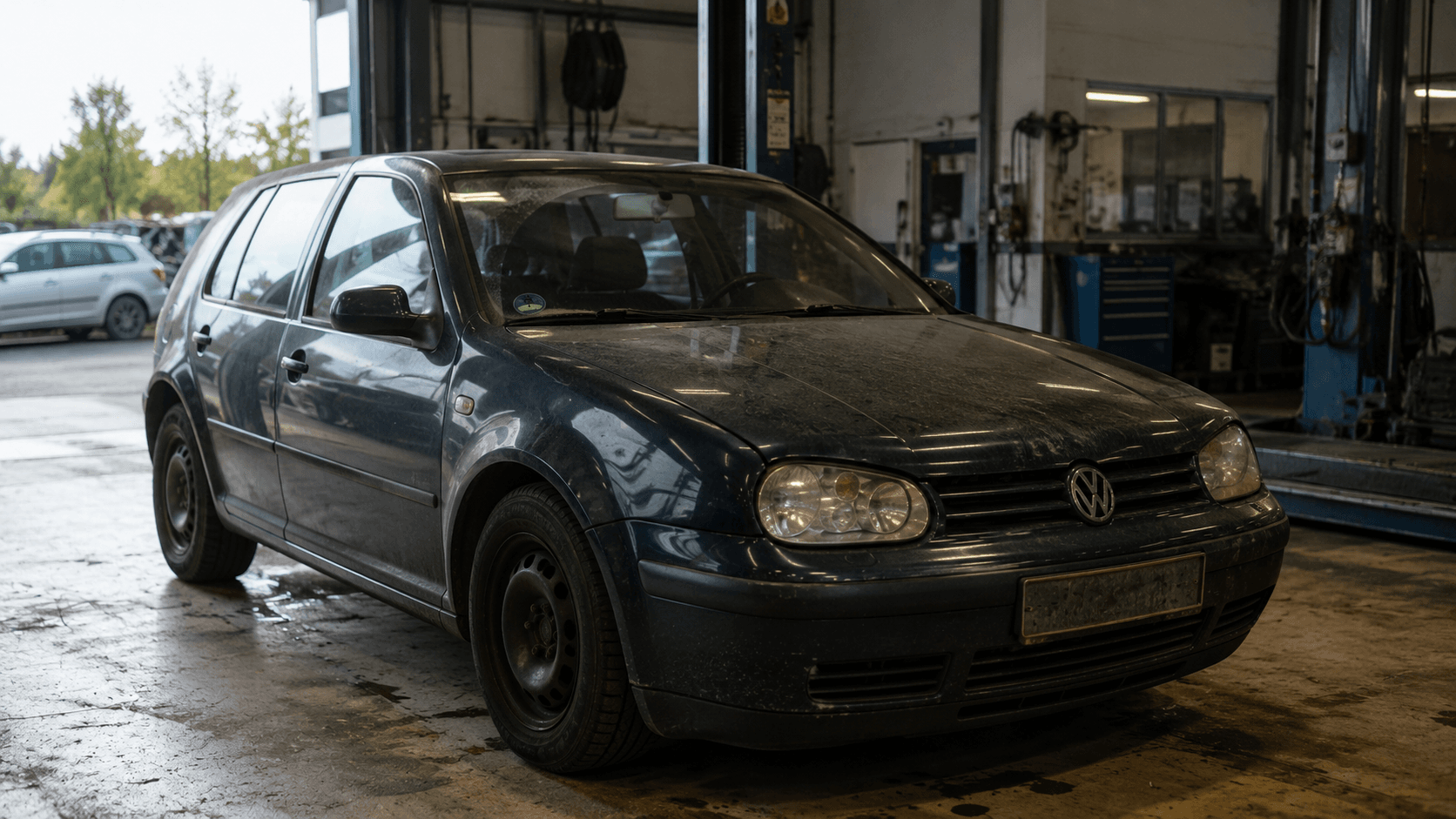
A damaged, deregistered or non-roadworthy vehicle does not remain a commercial product merely because it is advertised for repair, sold through an auction or intended for export. Once it meets the legal criteria for an end-of-life vehicle, it is waste and must enter the regulated collection and treatment system.
This distinction affects vehicle manufacturers, importers, dealers, insurers, leasing companies, auction platforms, repair businesses, exporters and authorised treatment facilities.
Why the distinction matters
A used vehicle remains a product that can be sold, repaired, registered and exported under the applicable vehicle and trade rules.
An end-of-life vehicle is waste. It must be delivered to an authorised treatment facility or an approved collection point and handled in accordance with the Regulation. It cannot lawfully be presented as an ordinary used vehicle to avoid waste-management or export controls.
The Regulation defines an end-of-life vehicle as a vehicle that is waste under the Waste Framework Directive or that meets one of the criteria in Annex I. A used vehicle is a registered vehicle that is not an end-of-life vehicle.
The description chosen by the seller is not decisive. Terms such as “repairable”, “for export”, “salvage vehicle” or “for spare parts” do not override the vehicle’s actual condition and the binding legal criteria.
When is a vehicle automatically an end-of-life vehicle?
Annex I establishes fixed criteria under which a vehicle must be treated as an end-of-life vehicle.
These criteria include situations where the vehicle:
- has been cut into pieces or dismantled for parts;
- has been burnt to the extent that the engine or passenger compartment is completely destroyed;
- has been submerged above the dashboard;
- has safety-critical or structural components that cannot technically be repaired or replaced;
- has irreversible structural or safety defects;
- has been handed over for treatment to an authorised treatment facility or collection point;
- has been declared a total technical loss by an insurer on the basis of an automotive expert’s assessment.
Where one of these conditions is met, the vehicle is legally an end-of-life vehicle. A subsequent intention to sell or repair it does not restore its status as a product.
The fixed criteria are intended to reduce inconsistent classifications between Member States and prevent severely damaged vehicles from being transferred or exported as used vehicles.
Other vehicles require a technical assessment
Not every damaged or non-roadworthy vehicle automatically meets one of the fixed criteria.
Annex I also contains indicative criteria that can trigger an assessment by an independent automotive expert. These include cases where:
- the vehicle has been abandoned or no vehicle identification number can be established;
- it has not been adequately protected against damage during storage or transport;
- the cost of repairing the vehicle, together with its current value, exceeds its expected market value after repair;
- water damage below dashboard level has affected the engine or electrical system;
- fuel, gas or other liquids are leaking in a manner that creates a safety or environmental risk;
- the vehicle has been partially dismantled;
- entry points have been permanently closed using welding or filling materials.
These circumstances do not necessarily make the vehicle waste on their own. They indicate that a professional assessment is needed to determine whether the vehicle remains realistically repairable and suitable for continued use.
This distinction is particularly relevant to accident vehicles and restoration projects. A damaged vehicle may remain a product if a technically credible repair is possible and there is a genuine intention to return it to roadworthy use.
Total technical loss and total economic loss are different
The Regulation makes an important distinction between a total technical loss and a total economic loss.
A vehicle declared a total technical loss by an insurer on the basis of an expert assessment meets a fixed end-of-life criterion. It must therefore be treated as waste.
A total economic loss does not automatically have the same effect. It generally means that the estimated cost of repair is commercially disproportionate to the vehicle’s value. The vehicle may still be technically repairable.
However, an economic total loss creates a significant compliance risk. Where repair costs and the vehicle’s existing value exceed its expected market value after repair, an independent technical assessment may be required. A private individual transferring a vehicle declared an economic total loss must also provide evidence that the vehicle is not an end-of-life vehicle.
Insurance classifications should therefore identify clearly whether the conclusion concerns technical impossibility, economic viability or both. Using the generic term “total loss” may not provide enough information to determine the vehicle’s legal status.
Sales and auctions will require stronger evidence
The Regulation introduces documentation requirements for economic operators transferring ownership of used vehicles within the EU.
The seller must be able to demonstrate that the vehicle is not an end-of-life vehicle. This applies regardless of the sales method and expressly includes auctions, distance contracts and online platforms.
The necessary evidence will generally consist of either:
- proof that the vehicle is roadworthy; or
- an assessment confirming that it does not meet the end-of-life criteria in Annex I.
Private individuals are subject to a narrower rule. They must provide this documentation particularly where the vehicle has been declared a total economic loss or where the sale is completed entirely online without a physical handover between seller and buyer.
The requirements will be relevant to insurers and salvage-auction operators that sell large volumes of damaged vehicles. A sales listing and vehicle registration document will no longer be sufficient where there are objective reasons to question whether the vehicle remains a product.
Online platforms may also need to review the information required from professional sellers and the evidence retained for high-risk vehicle categories.
A repair intention must be credible
A vehicle does not necessarily become waste because it requires substantial repairs.
The owner may request an exemption from the end-of-life classification where the vehicle is undergoing repair. The competent authority can assess whether the repair is genuine and whether the vehicle is expected to return to lawful use.
The Regulation nevertheless prevents a repair claim from being used indefinitely.
Where the owner does not obtain the required roadworthiness certificate within five years of the technical assessment, the vehicle becomes an end-of-life vehicle.
The repair route therefore requires more than storing a damaged vehicle or expressing a future intention to restore it. There must be a technically credible project and evidence that the vehicle can return to roadworthy condition.
“For spare parts” usually indicates waste treatment
A vehicle sold primarily for dismantling or component recovery is not being transferred for continued use as a vehicle.
Where the vehicle has already been dismantled, cut into pieces or delivered for treatment, it meets a fixed end-of-life criterion. The possibility of reusing individual parts does not change the status of the original vehicle.
Reusable components may be removed and placed back on the market under the applicable rules. The remaining vehicle must still be depolluted and treated by an authorised facility.
This is particularly important for advertisements describing severely damaged vehicles as “parts vehicles”. The commercial value of the engine, electronics or body parts does not mean that the complete vehicle remains a used product.
What changes for vehicle exports?
The Regulation strengthens controls intended to prevent end-of-life and non-roadworthy vehicles from leaving the EU as used vehicles.
From 1 September 2031, a used vehicle may generally be exported only where it:
- is not an end-of-life vehicle; and
- is roadworthy at the time of the customs declaration.
Export documentation will need to include the vehicle identification number, information concerning the Member State of last registration and evidence of the vehicle’s status and roadworthiness. Certain vehicles of historical or cultural interest are subject to specific treatment.
This represents a significant change for traders exporting damaged, deregistered or repairable vehicles to third countries.
A vehicle that does not satisfy the EU roadworthiness requirement cannot be exported simply because the receiving country would allow it to be repaired or registered. Similarly, an end-of-life vehicle cannot be reclassified as a used vehicle through a commercial invoice.
The export controls will affect vehicle dealers, auction houses, freight forwarders and customs representatives as well as the vehicle owner.
What happens once the vehicle becomes waste?
The owner of an end-of-life vehicle must deliver it without undue delay to an authorised treatment facility or an approved collection point.
Producers and Producer Responsibility Organisations must establish collection systems that provide adequate coverage across the Member State. The systems must accept end-of-life vehicles from different sources and also cover certain waste parts removed during repair.
Delivery of the complete vehicle must generally be free of charge to the last owner.
Charges may be permitted where essential vehicle components are missing or where waste has been added to the vehicle.
Essential components can include:
- the engine or electric drive motor;
- the electric vehicle battery;
- major body panels;
- other parts necessary for the vehicle’s principal structure or operation.
There are important exceptions.
Where an electric vehicle battery has been removed and handled professionally in accordance with the EU Batteries Regulation, the absence of that battery does not automatically remove the right to free take-back. Vehicles declared a total technical loss must also be accepted free of charge even where essential components are missing.
The Regulation introduces a stronger vehicle EPR system
The new framework expands and harmonises Extended Producer Responsibility for vehicles.
From 1 September 2029, producers will be responsible for vehicles they first make available in a Member State. The obligation applies even where the vehicle had previously been marketed in another EU country before entering that national market.
A producer can be a manufacturer, importer or distributor that professionally makes a vehicle available for the first time in a Member State. The definition also covers distance-selling structures.
Producer responsibility will include financing and organising relevant parts of:
- end-of-life vehicle collection;
- transport to treatment facilities;
- depollution, dismantling and treatment;
- public information and awareness measures;
- reporting and programme administration;
- systems for exchanging information on vehicle status and treatment.
Producers may fulfil these obligations individually or through a Producer Responsibility Organisation. Member States may require collective compliance for some or all producers.
Vehicle producers will still register nationally
The Regulation creates a harmonised EU framework, but it does not establish one central producer registration for the whole Union.
Each Member State must maintain a register of producers. A company must register in every Member State in which it first makes vehicles available.
Only registered producers, or the relevant EPR authorised representatives acting for them, may place vehicles on that national market once the registration provisions apply.
A vehicle manufacturer selling through local subsidiaries may therefore have different responsible entities in different countries. Importers and distributors can also become producers where they are the first companies making the vehicles available in a particular Member State.
Cross-border and distance-selling structures will require particular attention. Producers not established in the destination country may need to appoint an authorised representative for EPR there.
The responsible entity for vehicle type approval or product conformity is not necessarily the same entity that qualifies as the national EPR producer.
What happens when a vehicle is sold in one country and scrapped in another?
Vehicles frequently change Member States during their operational life.
A vehicle may be introduced in Germany, resold in Belgium and eventually become an end-of-life vehicle in Spain. The producer that originally financed EPR in one market may have no direct registration or operational relationship with the treatment system in the country where the vehicle becomes waste.
The Regulation creates a dedicated cross-border mechanism to address this imbalance.
Where an M1 or N1 vehicle becomes an end-of-life vehicle in a Member State and no producer can be identified there, the manufacturer must cover specified waste-management costs. Manufacturers must appoint a representative for the cross-border mechanism in the relevant Member States and establish cooperation arrangements with waste-management operators. A Producer Responsibility Organisation may perform this role.
This cross-border representative is conceptually different from the ordinary EPR authorised representative used by a foreign producer to comply in a market where it sells vehicles.
The mechanism recognises that vehicles remain mobile products throughout their working lives and that end-of-life costs do not always arise in the country of first sale.
Producer fees will reflect vehicle design
Producer contributions will not be based solely on the number of vehicles sold.
The Regulation requires fee modulation based on characteristics that affect the eventual cost and quality of treatment.
Relevant factors include:
- vehicle weight, excluding the electric vehicle battery;
- ease and cost of dismantling;
- reusability and recyclability;
- materials or components that disrupt recycling;
- recycled content;
- the presence of substances of concern.
The system is intended to create a financial incentive for vehicles that are easier to dismantle, repair and recycle and that make greater use of secondary materials.
Detailed national fees will still depend on the structure of each Member State’s collection and treatment system.
Which vehicles are covered?
The full regulatory framework primarily applies to passenger cars in category M1 and light commercial vehicles in category N1.
Selected obligations are extended to additional categories, including certain:
- motorcycles and other L-category vehicles;
- buses and coaches;
- heavy goods vehicles;
- trailers;
- special-purpose vehicles.
The precise obligations differ by vehicle category. Some expanded vehicle categories are covered by collection, treatment and producer-responsibility provisions without being subject to every design, recycled-content or passport requirement applicable to passenger cars and vans.
Manufacturers should therefore avoid applying the M1 and N1 framework unchanged to all vehicles.
Historical vehicles that retain their recognised status and certain military, emergency or specialised vehicles are subject to exclusions or specific treatment.
The Digital Circularity Vehicle Passport
The Regulation will introduce a Digital Circularity Vehicle Passport from 1 September 2032.
The passport will provide access to information relevant to dismantling, component replacement, reuse, remanufacturing and recycling. It is expected to include information such as:
- how specified parts and components can be removed;
- the location of materials and substances requiring particular treatment;
- recycled-content information;
- access to the official spare-parts catalogue;
- information needed by dismantlers and treatment operators.
The passport must be accessible free of charge to the relevant users.
It is separate from the battery passport required under the EU Batteries Regulation. It also does not replace the registration certificate, roadworthiness documentation, certificate of destruction or producer registration.
Recycled plastic requirements will follow later
The Regulation also introduces mandatory recycled-plastic content for new vehicles.
Six years after its entry into force, at least 15% of the plastic used in new vehicles must come from recycled material. The target will increase to 25% after ten years.
At least 20% of the required recycled plastic must originate from plastics recovered from end-of-life vehicles.
These requirements reinforce the connection between vehicle design and end-of-life treatment. Producers will need reliable recycled-content evidence, while treatment operators will face greater demand for automotive-quality secondary plastic.
The recycled-content rules are an important part of the Regulation, but they do not determine whether an individual damaged vehicle is waste.
What businesses need to prepare
The immediate impact differs across the automotive value chain.
Vehicle manufacturers and importers will need to map national producer entities, EPR registrations, authorised representatives and cross-border financing arrangements.
Insurers and automotive experts will need assessment processes that distinguish clearly between total technical loss, total economic loss and vehicles capable of credible repair.
Dealers, auction operators and online platforms will need procedures for obtaining and retaining evidence that damaged vehicles offered for sale are not end-of-life vehicles.
Exporters and customs intermediaries will need roadworthiness and vehicle-status documentation before the 2031 export controls become applicable.
Leasing companies, fleet owners and repair businesses will need clear rules for deciding when retained or damaged vehicles remain assets and when they must enter the authorised waste-treatment system.
These processes will need to be supported by consistent documentation. A vehicle cannot be treated as a product for sales purposes, as waste for accounting purposes and as a repairable asset for export purposes without resolving the underlying legal status.
A harmonised test with national compliance consequences
Regulation (EU) 2026/1738 introduces a more objective framework for determining when a vehicle has reached the end of its life.
Severely damaged, dismantled or technically irreparable vehicles will no longer be able to circulate as used products merely because a buyer is willing to accept them. Economic total losses and repairable vehicles remain possible, but they require stronger evidence and, in some cases, an independent technical assessment.
The Regulation also changes the wider compliance structure around vehicles. Producers will face national registrations, EPR financing, cross-border cost mechanisms and design-based fee modulation. Sellers and exporters will need evidence that vehicles remain products, while treatment facilities will operate within a more traceable collection and reporting system.
The transition periods provide time to prepare, but they do not reduce the need for early supply-chain and role assessments.
Viron Compliance supports vehicle manufacturers, importers and distributors with national EPR assessments, producer registrations, authorised representation and ongoing environmental compliance across European markets.