

Portugal Furniture and Mattress EPR: Is Registration Already Required?
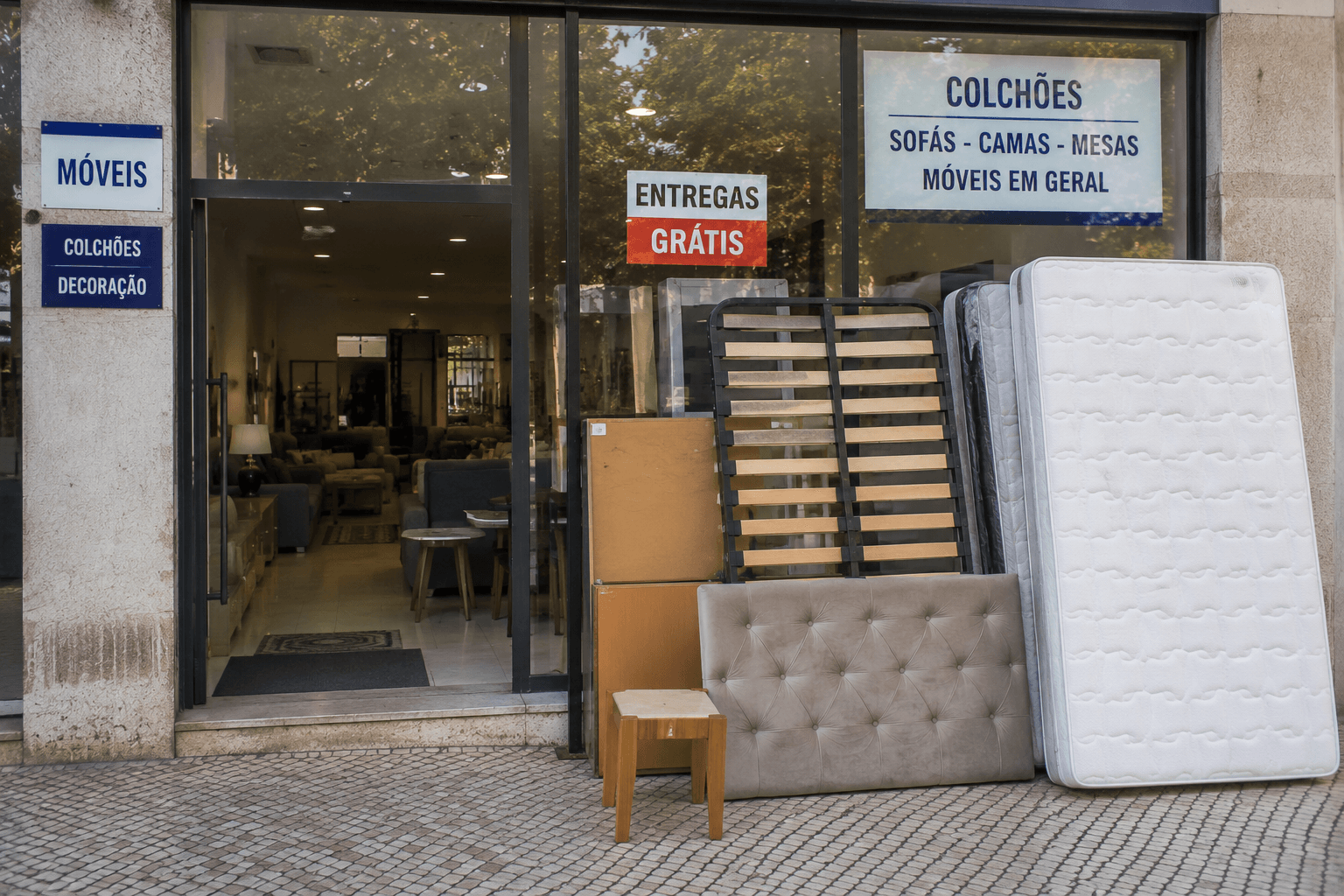
Portugal has created an Extended Producer Responsibility system for furniture and mattresses, but the practical compliance infrastructure is not yet fully operational.
The legal deadline for producers to establish the system was 31 December 2025. However, as of July 2026, the Portuguese Environment Agency still lists producer registration for furniture and mattresses as “not yet available”, and the licensing of collective systems is still being completed.
This creates an unusual position: the legal framework and producer responsibilities already exist, but companies cannot yet complete every normal EPR step through an operational collective system.
What does the law require?
Portuguese law requires producers of furniture and mattresses to finance and organise the management of the products they place on the market once they become waste.
The system must work towards national collection and recycling targets. Producers are collectively expected to ensure that at least 25% of the furniture and mattresses placed on the market is collected by the end of 2026. The collection target increases to 40% by 2030.
By the end of 2030, 90% of the collected furniture and mattress waste must be recycled.
These targets show that the new regime is not only a future policy proposal. It is already part of Portuguese waste law.
Why is the system not fully operational?
Producers are expected to meet their responsibilities through either an individual system or a licensed collective system.
An individual system requires authorisation from the Portuguese Environment Agency. A company cannot simply organise occasional waste collections and describe this as an individual EPR system.
Most producers are therefore expected to join a collective system that manages registration, reporting, collection and treatment on their behalf.
Several organisations have been preparing applications to operate such systems. However, the public producer-registration route and the full collective compliance process have not yet been made available.
The delay does not remove the legal framework. It means that the route through which most companies will comply is still being established.
Are producers already required to register?
The answer depends on what is meant by registration.
Portuguese EPR law requires producers to be recorded in the national producer register and to report the products they place on the market. In practice, however, the Portuguese Environment Agency’s current registration guidance still marks the furniture and mattress stream as unavailable.
Companies cannot complete a registration process that has not yet been opened by the authority.
At the same time, they should not interpret the unavailable portal as confirmation that furniture EPR does not apply or that historic market data will never be requested.
Once the registration process opens, producers may need to provide information covering an earlier reporting period or quantities placed on the market before the collective system became fully operational. The exact first reporting period has not yet been confirmed.
Who is considered the producer?´
The producer is generally the economic operator that first places furniture or mattresses on the Portuguese market on a professional basis.
Depending on the supply chain, this may be:
- a Portuguese manufacturer selling its own products;
- an importer bringing furniture or mattresses into Portugal;
- a business selling products under its own name or brand;
- a foreign company selling directly to Portuguese end users.
The physical manufacturer is not always the responsible entity.
For example, where furniture is manufactured outside Portugal and imported by a Portuguese distributor, the importer may carry the producer responsibility. Where a foreign online seller supplies Portuguese consumers directly, the foreign seller may itself be the producer.
The correct legal entity must therefore be identified from the actual sales and distribution structure.
Do foreign online sellers need an authorised representative?
Portugal’s general EPR framework requires producers established in another EU Member State or outside the EU that sell directly to Portuguese end users to appoint an authorised representative in Portugal.
The representative is responsible under a written mandate for fulfilling the producer’s Portuguese EPR obligations.
The incomplete registration infrastructure does not automatically remove this requirement. It does, however, affect when the representative can complete the final registration and collective-system onboarding.
Foreign sellers should therefore distinguish between appointing the legally required representative and completing the later operational registration steps.
Which products are covered?
The new stream covers furniture placed on the Portuguese market, mattresses and the waste resulting from those products.
The scope is not limited to household bedroom or living-room furniture. Depending on the detailed classification, it can also be relevant to office, commercial, hospitality, outdoor and other furniture products.
A company should assess the product itself rather than relying only on its customer group. Furniture sold exclusively to businesses is not automatically outside the EPR system.
Products with additional functions may also create overlapping obligations.
An electrically adjustable desk, illuminated mirror or motorised bed may fall within the furniture stream while also meeting the definition of electrical and electronic equipment. The packaging used to supply the product remains subject to packaging EPR separately.
One sale can therefore trigger several producer responsibility streams.
Are fees already known?
A standard collective fee structure is not yet available.
The future fees will need to finance activities such as collection, transport, sorting, preparation for reuse, recycling, public information and system administration.
The amounts are likely to depend on the type and weight of the products placed on the market. Fee modulation may also distinguish between products based on their durability, repairability, recyclability or material composition.
Until the licensed systems publish their tariffs, companies should be cautious with estimates presented as confirmed Portuguese EPR fees.
The absence of a final tariff also means that companies cannot yet calculate their full future exposure with certainty.
What information should producers retain?
Even though the final reporting format is pending, companies should already be able to identify which furniture and mattress products they place on the Portuguese market.
The most relevant information is likely to include the responsible legal entity, product type, number of units, total weight, brand, sales route and date of market placement.
This information will be needed both for producer registration and for calculating future contributions.
The key point is not to build a complex reporting process before the authority publishes the final requirements. It is to avoid reaching the opening of the system without reliable historic market data.
Does the delay create a compliance exemption?
No formal general exemption has been announced.
The current problem is operational rather than legal. Producers cannot complete certain steps because the relevant portal and licensed collective-system arrangements are not yet available.
That should be documented.
A company should be able to show that it assessed its producer status, identified the relevant products, retained market data and followed official implementation updates.
This is different from ignoring the new stream until a marketplace, authority or collective system requests a registration number.
What should companies do now?
The current position can be summarised in four points:
- The furniture and mattress EPR framework is already part of Portuguese law.
- The standard producer-registration and collective-system route is not yet fully operational.
- Producers should retain product and market data while the implementation process is completed.
- Foreign distance sellers must also consider the Portuguese authorised representative requirement.
Companies should rely on the latest information from the Portuguese Environment Agency rather than treating the original December 2025 deadline as proof that every compliance process is already available.
How Viron can support
Viron helps furniture and mattress producers determine which legal entity carries the Portuguese EPR responsibility and whether an authorised representative is required.
We can also prepare the producer data and coordinate registration, collective-system membership, declarations and ongoing compliance once the Portuguese processes become operational.