
Used Electronics or WEEE? When a Cross-Border Return Becomes a Waste Shipment
A defective electronic product is not automatically waste. It may still be a product if it is genuinely being returned for repair, refurbishment or reuse.
However, describing a shipment as a “warranty return” does not decide its legal status.
If the equipment has been discarded, is being sent for recycling or is unlikely to return to use, it may already qualify as waste electrical and electronic equipment, or WEEE. Cross-border waste shipment rules then apply in addition to normal WEEE producer obligations.
This distinction has become more important since the new EU Waste Shipment Regulation and the Digital Waste Shipment System, known as DIWASS, became applicable on 21 May 2026.
When does an electronic device become waste?
Under EU waste law, an item becomes waste when its holder discards it, intends to discard it or is required to discard it.
The condition of the equipment is relevant, but it is not the only factor.
A non-functional device may remain a product where there is a realistic and documented intention to repair and reuse it. A working device may still become waste if it has been discarded for recycling, parts recovery or disposal.
The actual purpose of the shipment therefore matters more than the description used on the transport documents.
Can defective equipment be returned for repair without being treated as WEEE?
Yes, in certain cases.
The WEEE Directive recognises specific business-to-business transfers where defective or used equipment is sent abroad with the intention of reuse.
These include:
- equipment returned to the producer for repair under warranty;
- professional equipment sent under a valid contract for repair or refurbishment;
- defective professional equipment, such as certain medical devices, returned to the producer for root-cause analysis.
These cases benefit from specific documentation rules. They are not a general exemption for every shipment labelled as a return.
There must be conclusive evidence that the transfer falls within one of the recognised cases and that reuse remains the intended outcome.
What about ordinary shipments of used electronics?
Where used equipment is shipped for direct reuse rather than repair, the holder must normally be able to show that it is functional and is not waste.
Relevant evidence includes:
- a contract or invoice confirming direct reuse;
- proof of functionality for the individual equipment;
- a declaration that the shipment does not contain waste;
- suitable packaging and protection against transport damage.
For most used electrical equipment, testing the key functions is sufficient. The results must still be recorded and linked to the equipment concerned.
A shipment of untested devices cannot normally be treated as reusable equipment merely because some units may work.
Why is packaging relevant to waste status?
Authorities assess more than the paperwork.
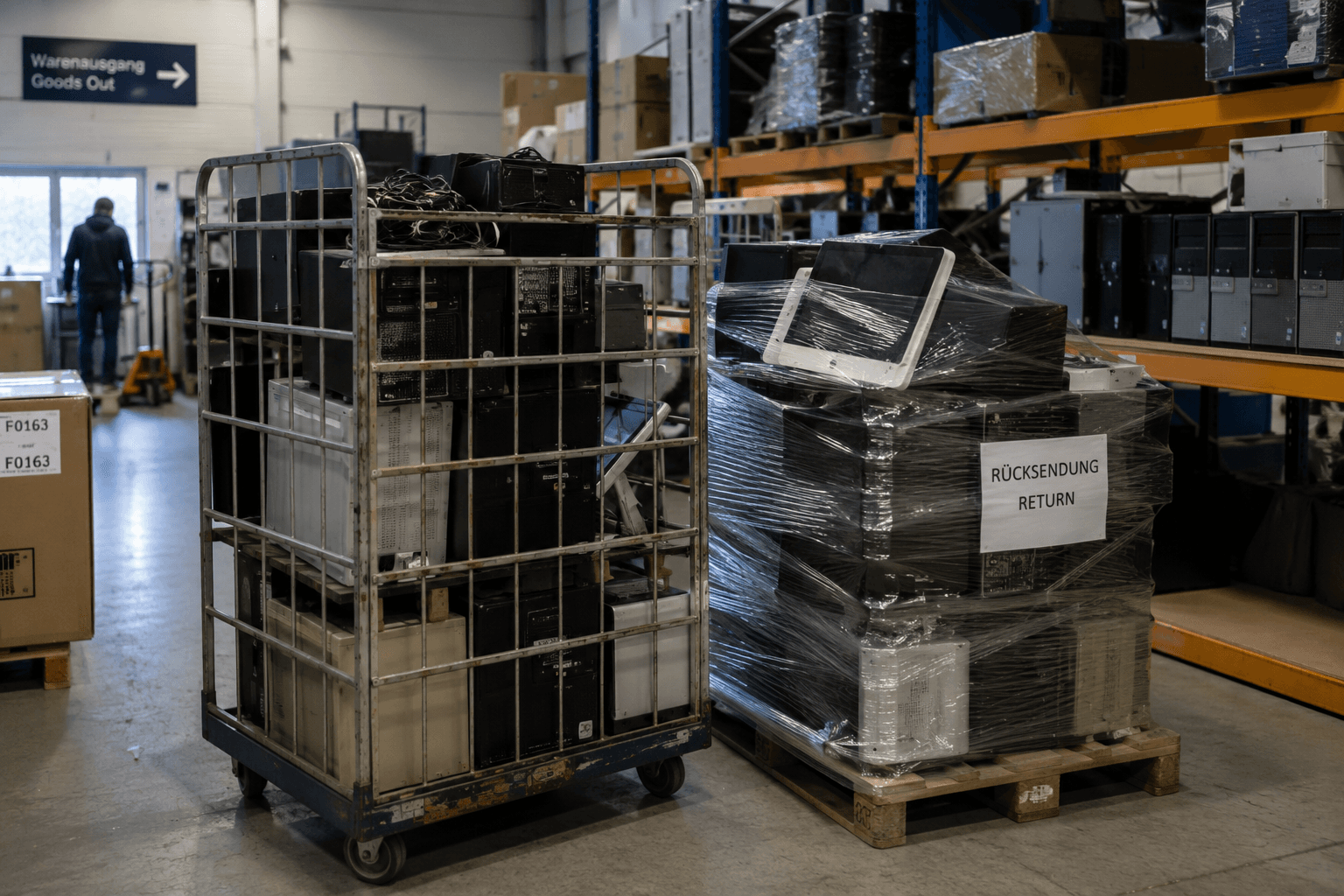
Equipment presented as reusable should be protected against damage during loading, transport and unloading. Loose devices, broken screens, exposed components or equipment stacked without suitable protection can undermine the claim that the shipment is intended for reuse.
Poor packaging does not automatically turn a product into waste. However, it can indicate that maintaining the equipment’s value and functionality is not the real purpose of the shipment.
Under the WEEE Directive, where the required evidence and transport protection are missing, authorities may treat the equipment as WEEE and presume that the consignment is an illegal waste shipment.
Can repairable and irreparable devices be shipped together?
Mixed consignments create particular risk.
A return batch may contain:
- products ready for direct reuse;
- products requiring repair;
- units intended only for root-cause analysis;
- devices that are beyond repair;
- loose parts and damaged batteries.
These items may not all have the same legal status.
Equipment intended for recycling or dismantling should not be included within a shipment presented as used products for repair. The presence of clearly discarded items can call the classification of the entire consignment into question.
The intended route for each relevant group of equipment should therefore be established before the shipment takes place.
What happens if the equipment is WEEE?
Once the shipment contains waste, the EU Waste Shipment Regulation applies.
Most shipments of electronic waste between EU Member States are subject to the prior informed consent procedure. This requires approval from the relevant authorities before the shipment begins.
A temporary exception remains until the end of 2026 for certain non-hazardous electronic waste classified under entries GC010 or GC020. These shipments may continue under the general information procedure where the classification requirements are met.
The simplified route should not be assumed to apply to mixed, contaminated or hazardous electrical waste.
Items containing hazardous components, damaged lithium batteries or other risks may require a different classification and procedure.
What changed with DIWASS?
Since 21 May 2026, prior notification and consent procedures involving EU Member States must be handled electronically through DIWASS or a connected national system.
The system covers:
- notification documents;
- decisions by the competent authorities;
- movement documents;
- information exchanged during the approval process;
- confirmation of completed waste treatment.
A transition currently applies to Annex VII documents used for green-listed waste shipments. Until 31 December 2026, these documents may generally continue to be handled through the previous process, primarily on paper.
This transition affects the method of documentation. It does not change whether a shipment qualifies for the general information procedure.
Do different rules apply when equipment leaves the EU?
Yes.
Since 1 January 2025, exports of all electronic waste from the EU to non-OECD countries have been prohibited.
Exports to OECD countries are subject to the prior informed consent procedure.
A shipment presented as used equipment may therefore receive particular attention where it is sent outside the EU. The exporter must be able to demonstrate that the devices are products intended for reuse rather than electronic waste being exported under another description.
Does a WEEE registration cover the shipment?
No.
WEEE registration concerns producer responsibility in a national market. It may include:
- registration with the national authority;
- membership in a compliance scheme;
- reporting of equipment placed on the market;
- financing collection and treatment;
- authorised representation.
The Waste Shipment Regulation controls the physical cross-border movement of waste.
A company can be correctly registered as an EEE producer and still carry out an illegal shipment if returned equipment is transported under the wrong classification or without the required procedure.
The same applies to take-back programmes operated through logistics providers, repair centres or group companies.
Questions to resolve before a cross-border return
Before returned electronics are shipped to another country, the business should be able to establish:
- whether the equipment has been discarded;
- whether the intended outcome is direct reuse, repair, refurbishment, analysis or recycling;
- whether the devices are functional or economically repairable;
- whether the shipment meets one of the documented B2B repair exceptions;
- whether the equipment is properly identified and protected;
- whether the consignment contains irreparable devices, loose components or hazardous batteries;
- which waste shipment procedure applies if any of the equipment is WEEE.
The destination being a manufacturer, repair centre or refurbishment facility does not by itself decide the classification.
The decisive issue is whether there is a credible, documented route back into use.
How Viron can support
Viron helps manufacturers and international sellers assess WEEE responsibilities connected with product returns, take-back programmes and cross-border sales.
We also coordinate national WEEE registrations, authorised representation and ongoing reporting across multiple markets.